How AI Is Revolutionising Automotive Photography and Vehicle Listings
Discover how AI is transforming automotive photography, improving vehicle listing performance, and helping dealerships get stock online faster

In today’s automotive retail landscape, photography is no longer just part of the sales process — it is the sales process.
Before a customer calls, messages, or visits a dealership, they’ve already made an emotional judgment based on what they’ve seen online.
And increasingly, artificial intelligence is shaping what they see.
AI is transforming automotive photography from a manual, time-consuming task into a streamlined, data-driven workflow. It’s changing how dealerships prepare images, how listings perform, and ultimately, how vehicles sell.
Here’s how AI is revolutionising automotive photography and vehicle listings in 2026.
The Digital Forecourt Is the First Impression
More than 90% of vehicle buyers begin their journey online. That means your vehicle imagery is often the first interaction a customer has with your brand.
When customers scroll through listings, they are making split-second decisions:
- Does this car look premium?
- Does this dealership look professional?
- Do I trust this seller?
Inconsistent lighting, cluttered backgrounds, crooked horizons or distracting forecourt elements reduce perceived value instantly.
Professional, clean imagery increases engagement.
AI is helping dealerships achieve that consistency at scale.
The Old Photography Workflow vs the AI Workflow
Traditionally, automotive photography followed this process:
- Photograph vehicle on site
- Transfer images to editing software
- Manually remove backgrounds
- Adjust brightness and colour
- Straighten horizons
- Add branding overlays
- Export and upload
For high-volume dealerships, this could take hours per batch — sometimes even days when combined with internal bottlenecks.
AI has compressed that workflow dramatically.
Now, dealerships can:
- Automatically remove backgrounds
- Detect and correct horizons
- Repair floors and reflections
- Standardise lighting
- Apply branding overlays
- Resize for multiple platforms
All within minutes.
The result? Faster time-to-market and consistent presentation.
Why Image Quality Impacts Conversion Rates
Better photography doesn’t just “look nice.”
It affects measurable metrics:
- Higher click-through rates (CTR)
- Increased time on listing pages
- Improved enquiry rates
- Faster stock turn
Consumers subconsciously associate presentation quality with vehicle quality.
Two identical vehicles priced the same can perform differently based purely on image presentation.
AI helps ensure every listing meets a professional standard — not just the best examples.
Consistency Across Multi-Site Dealer Groups
Dealer groups operating across multiple locations often struggle with visual inconsistency.
Different photographers.
Different lighting conditions.
Different editing standards.
Different branding applications.
AI introduces standardisation.
Dealership groups can now:
- Apply identical digital backdrops
- Maintain consistent framing
- Use uniform overlays
- Standardise lighting across sites
This strengthens brand perception and creates a cohesive digital presence.
Consistency builds trust.
Background Removal and Digital Environments
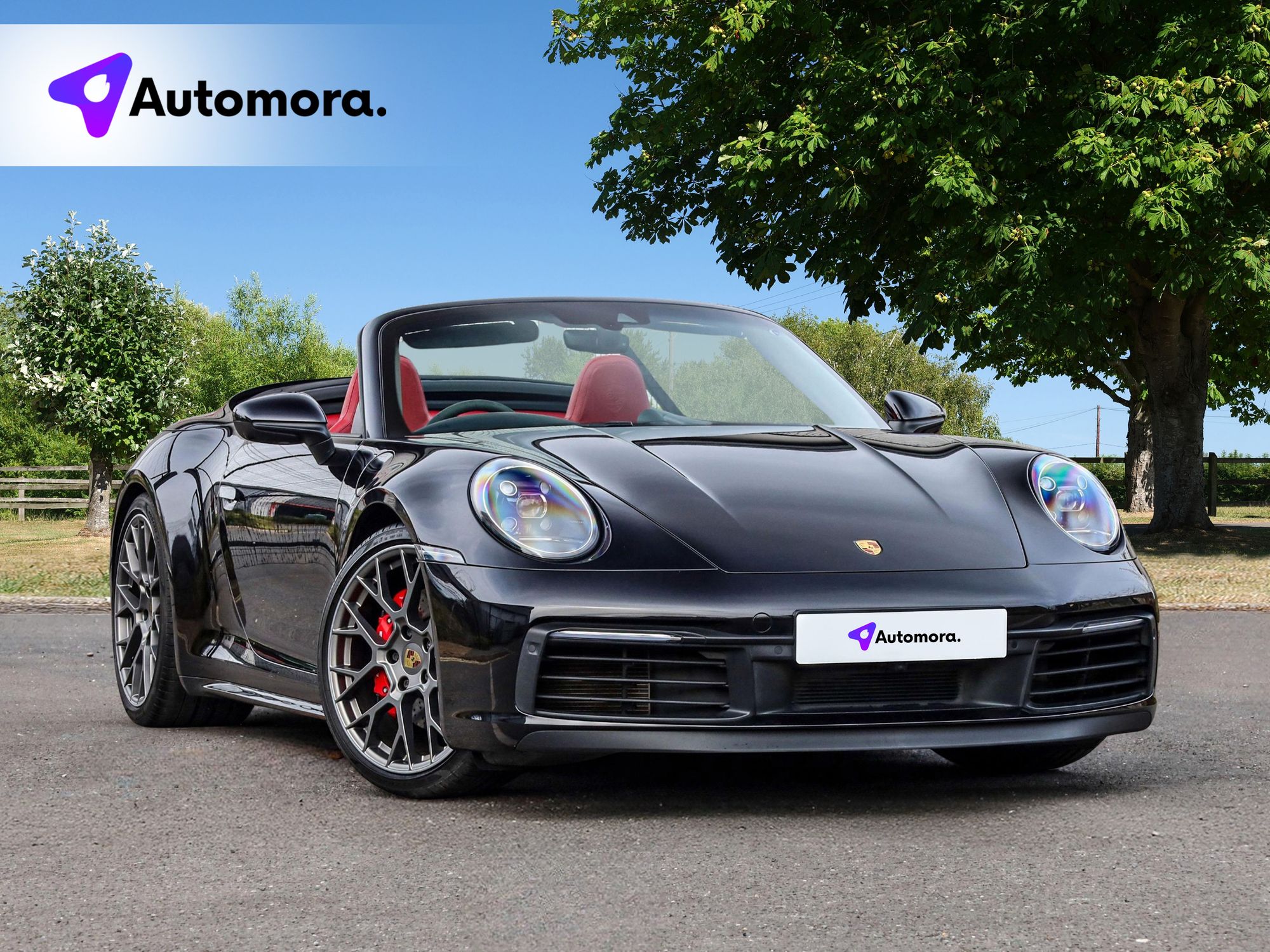
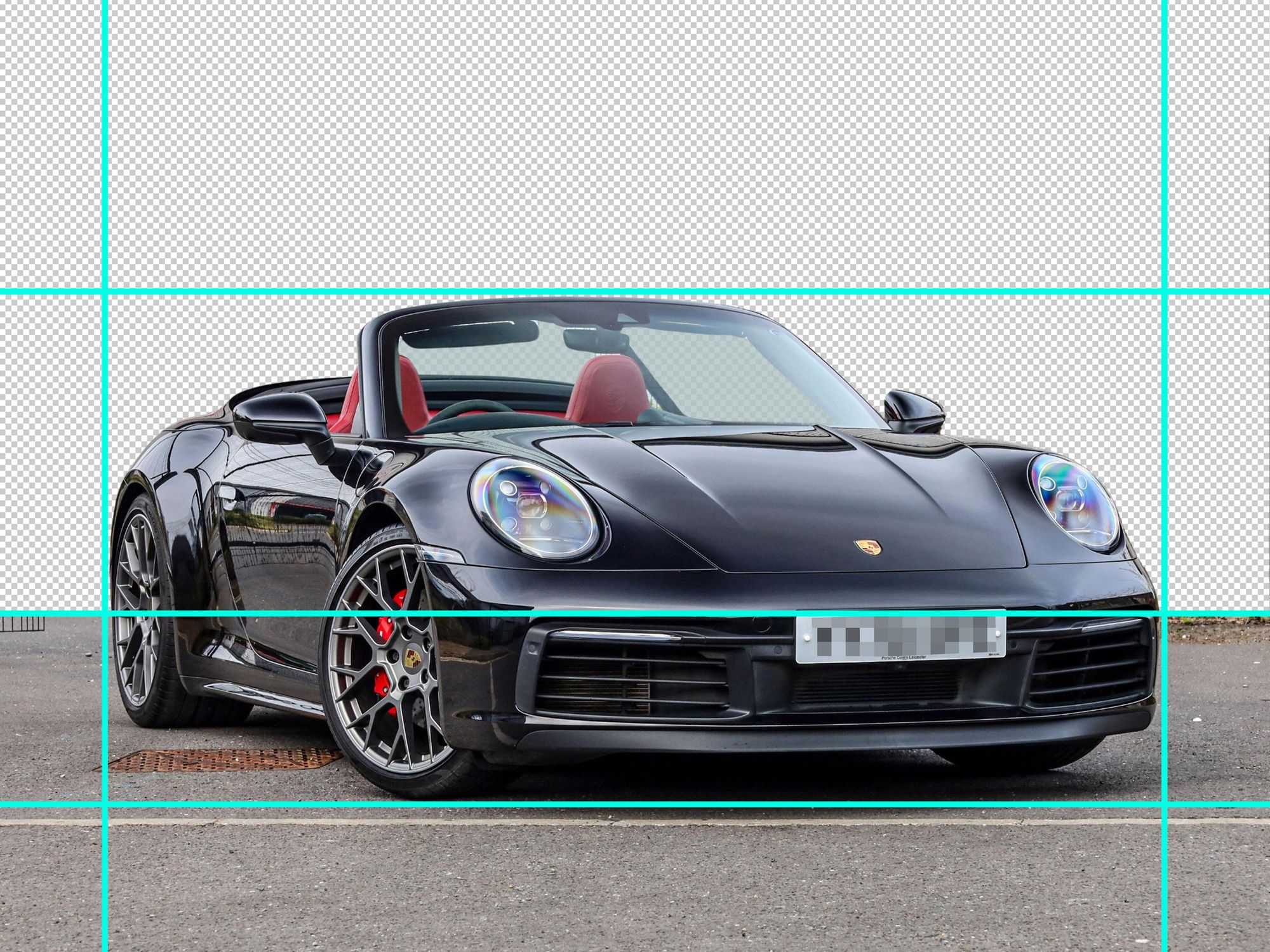
One of the most visible AI advancements is automated background removal.
Traditionally, this required:
- Manual masking
- Layer editing
- Time-consuming refinements
AI-powered systems can now:
- Detect vehicle edges precisely
- Separate foreground from background
- Preserve shadows and reflections
- Maintain natural lighting balance
This allows dealerships to present vehicles in:
- Clean studio-style environments
- Branded digital backdrops
- Weather-neutral settings
- Consistent lighting conditions
Without needing physical studios.
This dramatically reduces setup costs and time.
AI and Horizon Detection
Crooked images are surprisingly common in dealership listings.
Even a slight tilt:
- Reduces perceived professionalism
- Creates visual discomfort
- Suggests inattention to detail
AI can automatically detect:
- Vehicle alignment
- Ground plane
- Wheel symmetry
- Perspective distortion
And correct it instantly.
This removes manual rework and ensures every image looks intentional and polished.
Floor Repair and Reflection Enhancement
Forecourt surfaces are rarely perfect.
Common issues include:
- Oil stains
- Cracks
- Distracting markings
- Harsh shadows
AI-driven floor repair tools can:
- Clean imperfections
- Enhance reflections subtly
- Remove distractions
- Create a premium studio feel
Without making the vehicle look unrealistic.
This balance between realism and polish is critical.
Over-editing destroys trust.
Under-editing reduces impact.
AI allows dealerships to find the middle ground at scale.
Batch Processing at Scale
High-volume dealerships may process hundreds of vehicles per month.
Manual editing does not scale efficiently.
AI systems can:
- Process entire batches simultaneously
- Apply identical adjustments across sets
- Reduce editing time from hours to minutes
- Integrate with inventory systems
This reduces operational strain on marketing teams and photographers.
It also reduces dependency on external editing services with 24–48 hour turnaround times.
Speed becomes a competitive advantage.
AI and Platform Optimisation
Different advertising platforms require different image formats and resolutions.
For example:
- Auto Trader
- Dealer websites
- Social media
- Marketplace platforms
- Paid advertising networks
AI tools can automatically:
- Resize images for each platform
- Maintain aspect ratios
- Optimise compression
- Preserve quality while reducing file size
This improves load speeds and user experience — both important for SEO and conversion.
The Role of AI in Inventory Turnover
Speed to market is one of the most overlooked profitability drivers in automotive retail.
The faster a vehicle goes live online:
- The sooner it begins generating enquiries
- The shorter its days-in-stock
- The lower the holding cost
If image processing delays a listing by even 24–48 hours, that delay has real financial consequences.
AI reduces that delay to minutes.
For dealer groups operating on tight margins, this matters significantly.
Cost Efficiency and ROI
Beyond speed, AI offers cost advantages.
Traditional editing approaches may involve:
- In-house editors
- Outsourced editing teams
- Software subscriptions
- Additional manual labour
AI reduces:
- Labour hours
- Editing turnaround time
- Dependence on external providers
While improving consistency.
The ROI often comes from both cost reduction and increased sales performance.
Maintaining Authenticity
One concern dealerships sometimes raise is realism.
Buyers expect accurate representation.
Modern AI systems are designed to enhance — not distort.
Good AI preserves:
- Natural shadows
- Accurate paint colour
- Wheel detail
- Lighting balance
It refines presentation without misleading the buyer.
This balance is essential for long-term trust and reputation.
The Future of Automotive Visuals
Looking ahead, AI will likely continue evolving into:
- Automated 360° image enhancement
- AI-generated listing descriptions
- Predictive image scoring
- Real-time quality analysis during capture
- Integration with augmented reality previews
The dealerships that adopt these technologies early will:
- Reduce friction
- Improve presentation
- Increase efficiency
- Strengthen brand positioning
Final Thoughts
Automotive photography has shifted from being a manual creative task to a strategic operational function.
In 2026, AI is not replacing photographers.
It is empowering them.
It allows dealerships to:
- Scale consistency
- Reduce turnaround time
- Improve listing performance
- Compete digitally
The digital forecourt is now the primary showroom.
And AI is redefining how that showroom looks.
Your stock deserves better photos.Automora turns forecourt photos into showroom-ready listings in under four minutes.
See it on your own stock →